
Bored out of your wardrobe? Can’t see your summer dress any more? Swap dresses with your friend! I was over my bright yellow 100% cotton dress and just swapped it with my friend N during our holiday in Livorno, Italy for a pink knitted dress. By doing this, we are both extending the life-span of our dresses.

Recent research performed by the Department of Sustainability Science, LUT University, Finland even shows the positive effects of extended use of your garments. Researchers compared the global warming potential (GWP) of different ownership and end-of-life scenarios for textiles. And what do you think is a more sustainable approach? Innovative recycling, extended use or a subscription at your local clothing library?

Their analysis suggests the REDUCE scenario leads to the lowest GWP, followed by the REUSE scenario. ‘Reducing’ being extended use of a garment, and ‘reusing’ being reselling a garment, a.k.a. second hand or vintage shopping.
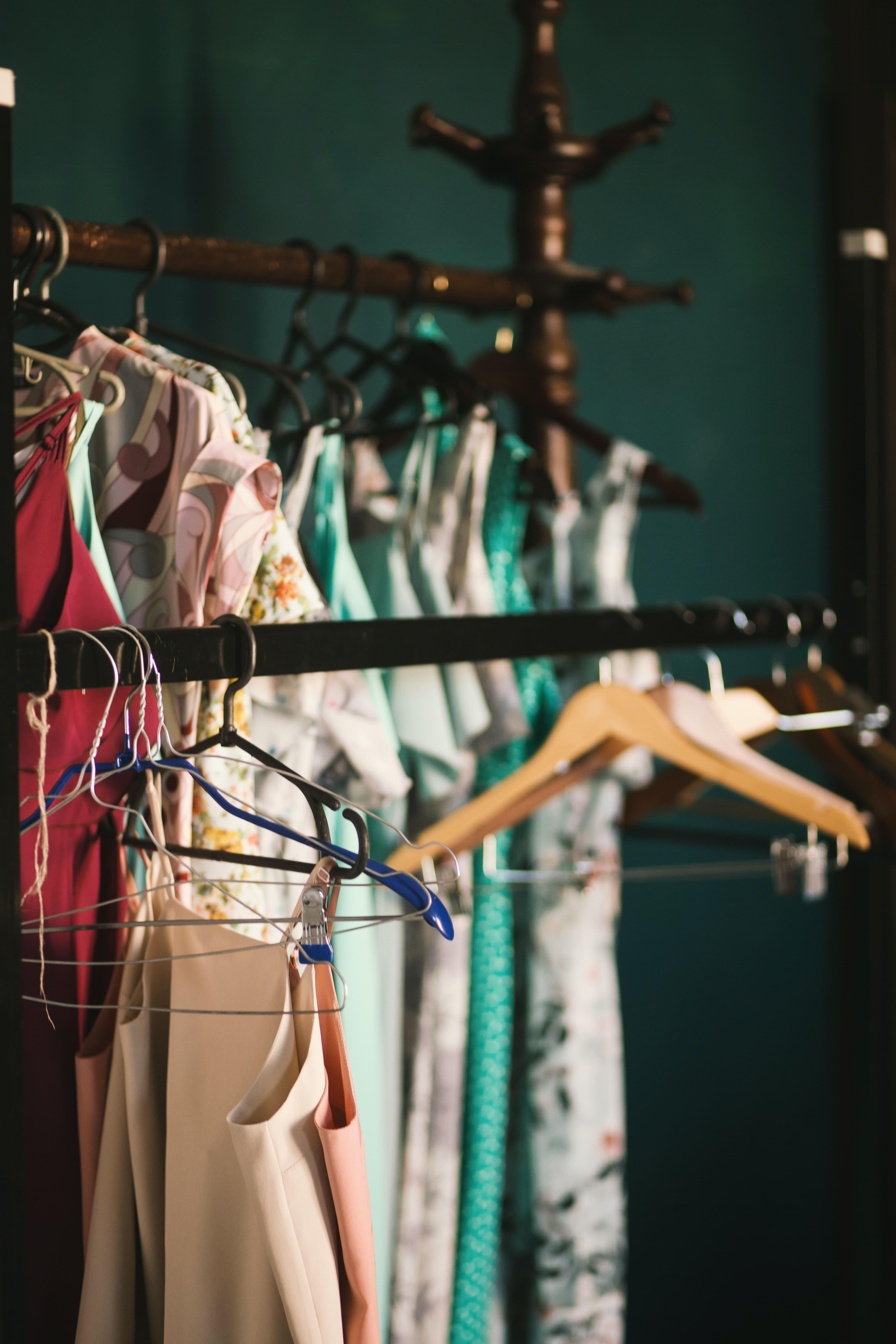
second hand and vintage

Recycling and leasing resulted in being the scenarios with a higher GWP. According to this study, textile recycling leads to higher overall emissions and the use of rental services will increase consumer’s mobility. On a large scale, this will cause a higher GWP.

Perhaps the words ‘sustainable’ and ‘mass-production’ don’t go hand in hand?

Even though the many innovative circular economy (CE) approaches are meant to be more ‘sustainable’, the actual environmental impact and behavioural changes of consumers are unknown. The last thing we need is for these approaches to have a more negative impact on the environment.

Let the researchers do the research and let us listen to the results of this paper: REDUCE & REUSE. So please keep on extending the life of your precious pieces by wearing them over and over again or making your friends (or strangers) wear them endlessly.

stop leasing?

But don’t cancel your subscription at the local clothing library just yet. The main problem in the textile industry is the massive over-production and this is a systematic problem.

Currently, putting a halt on the huge amount of garments produced each day is the most efficient way for the industry to become more sustainable. Even sustainable mass-production is still mass-production and perhaps the words sustainable and mass-production don’t go hand in hand?

Sources

Levänen, J., Uusitalo, V., Härri, A., Kareinen, E., & Linnanen, L. (2021, May 12 ). Innovative recycling or extended use? Comparing the global warming potential of different ownership and end-of-life scenarios for textiles. Environmental Research Letters, 16(5), 1-11.
Share this post with your friends

Other
posts

Thumbnail for article 'This Is Why Air Drying Is Better Than Tumble Drying'. Picture of towels drying outside on a line + the text: Environmental impact of a tumble dryer

This Is Why Air Drying Is Better Than Tumble Drying

Every choice we make can have a profound impact on the environment. When there’s a machine or tool that can make our daily lives easier and more comfortable, we are always quick to purchase it. But have we gone too far? Where do we draw the line between necessity and excessiveness? Maybe some of the products the corporate world is giving us, are not the best choice for us and the planet. In this article, we’re going to look at what tumble dryers are doing to our clothes and the environment, and why you should consider the natural and sustainable alternative to dry your laundry…

Read More »
Thumbnail for article 'What Are Microplastics Doing To The Planet, People And Animals?'. A straw laundry basket and plastic packaging. Text: the dangers of microplastics

What Are Microplastics Doing To The Planet, People And Animals? 

Plastic started out as a versatile and useful material that currently dominates many manufacturing industries, but it is now also starting to dominate the environment. Plastic products release microplastics when thrown away but also while being used. Microplastics are difficult for the human eye to see, so the potential negative effects are less visible and more difficult to measure compared to big plastics, but the amount of evidence is growing day by day to prove that microplastic pollution will have a terrible impact on marine ecosystems and human health. This 3-part series of posts will highlight this invisible threat that is entering our drinking water, how fashion is involved and what you can do to lower your own impact. In this second part, we’re going to look at the dangers and consequences of microplastic pollution…

Read More »
Thumbnail for article 'What Is The "PETA-Approved Vegan" Certification in Sustainable Fashion?' Lined paper with the PETA-Approved Vegan logo and the text: what it means + what it doesn't mean

What Is The “PETA-Approved Vegan” Certification in Sustainable Fashion?

While reading up on sustainable fashion, you might come across a PETA-Approved logo on products or on websites. This is a certification that is especially interesting for those of you who want to avoid wearing animal-products because you live a vegan lifestyle or for other reasons. It’s important to understand what this label means, and most importantly, what is doesn’t mean. We’ll summarize the true meaning at the end of the article. First, I’ll give an explanation of PETA and their “Approved Vegan” certification, how a brand or product can be awarded this label, and you can see some sustainable clothing brands that offer PETA-certified options…

Read More »

Share your thoughts on this topic!

Leave a Comment

Your email address will not be published. Required fields are marked *