
A term you will often see on this website is Code of Conduct. This post will give a quick explanation so you don’t have to open a new tab to look up the term.
According to Oxford Reference the official definition of Code of Conduct is:
A statement setting out guidelines regarding the ethical principles and standards of behaviour expected of a professional person or company
– Oxford Reference
In other words, a Code of Conduct is an agreement with rules and regulations within and between organizations and people. It shows what kind of behaviour is not accepted and what is expected. In the case of a fashion brand, the standards are used to hold their suppliers accountable. When used well, suppliers are asked by the brand to sign their Code of Conduct and external audits are held to ensure the rules are complied with. Every brand’s Code of Conduct can look different and can be less or more detailed.
The labour standards of the International Labour Organization (ILO) and the Universal Declaration of Human Rights are often used to create a Code of Conduct. These include:
-
Freedom of association
-
The right to organize
-
The right to collective bargaining
-
No forced labour
-
No child labour/minimum age
-
Equal & living wage
-
No discrimination
-
Healthy and safe working conditions
-
Maximum/reasonable working hours
-
Security of employment
What to watch out for
When a brand has a Code of Conduct, it does not automatically mean it is a very sustainable brand because you don’t know to what extent they actually check their suppliers. External social audits by for example Fair Wear Foundation or SMETA need to be conducted to get a clear view of what’s going on in the factories. Moreover, it is possible only some suppliers in their entire supply chain signed the Code of Conduct while they also work with suppliers that have not signed it. So, always try to find more information on how the Code of Conduct is used and complied with.
Some brands with good Codes of Conduct
The three brands below have some of the best Codes of Conduct from the brands listed on this website so far.
VEJA
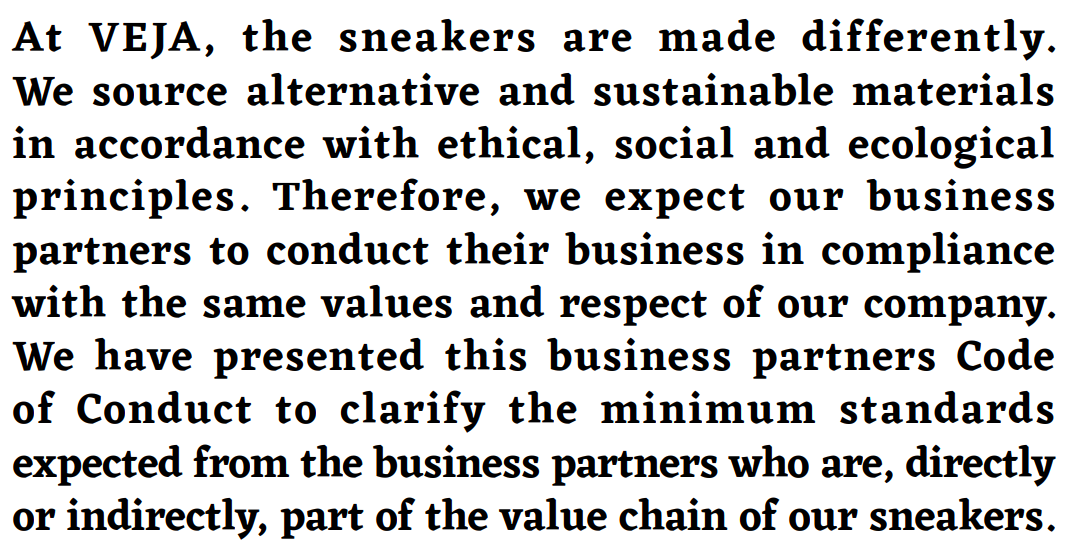
VEJA’s Code of Conduct consists of 20 principles that are each described in 3 languages. The Code of Conduct is clear and easy to understand and a lot of attention was also given to the visuals by adding images and coloured pages. VEJA claims their production locations are regularly checked.
Nudie Jeans
Nudie Jeans’ Code of Conduct is constructed like a contract and the last page has space for signatures. The Code starts with an introduction and is followed by detailed descriptions of twelve principles. They claim all their suppliers signed the Code of Conduct and regular audits are conducted by Fair Wear Foundation or independent consultants.

Maggie Marilyn
Like the previous one, Maggie Marilyn’s Code of Conduct is constructed like a contract and starts with an introduction including a personal message from Maggie. They divided their Code of Conduct into around 18 principles and some extra ones that touch on some practical aspects. They claim all their suppliers signed the Code and they started third party audits in September 2020.



1 thought on “What is a Code of Conduct in the fashion industry?”
Thanks for reading! 🙂